1st International ALTA Americas Conference
Nickel-Cobalt-Copper
Advances in Mining & Metallurgical Processing Methods for Extraction, Recovery & Recycling Critical Minerals
December 10 - 11, 2025 ALL TIMES PST
Wednesday, December 10
8:00 amRegistration Open
2:20 pmOrganizer's Remarks
MARKET DEMAND AND OVERVIEW
From Outlook to Action: Securing the Future of Critical Mineral Supply
 David Anonychuk, Global Vice President, Metallurgy & Consulting, SGS
Copper, nickel, and cobalt are vital to the energy transition, yet global supply chains face growing risks from underinvestment and concentration. This presentation shares key findings from the IEA’s 2025 Global Critical Minerals Outlook and the G7 Critical Minerals Action Plan, which emphasize diversified production and targeted investment to strengthen mineral security through innovation and policy alignment. SGS will also share practical insights for advancing mineral projects.
3:30 pmSponsored Presentation (Opportunity Available)
4:00 pmRefreshment Break in the Exhibit Hall with Poster Viewing (Sponsorship Opportunity Available)
EXTRACTION OPERATIONS FOR THE ENERGY TRANSITION
Biological Intelligence in Action: Recovering Critical Minerals with Microbes and AI
 Christine Green, VP Technology & Operations, Technology & Operations, Endolith
What if microbes could help solve the copper crisis? Backed by BHP’s Think & Act Differently program and working with six of the world’s ten largest mining companies, Endolith’s platform uses engineered microbes and AI to extract copper from waste…faster, cheaper, and cleaner. CEO Dr. Liz Dennett shares why biological intelligence is reshaping mineral recovery and what it means for the future of the supply chain.
Solving Strategic Vulnerability of Battery Metals
 Oliver Gunasekara, Co-Founder & CEO, Impossible Metals
Impossible Metals addresses the strategic vulnerability of critical metals. Seabed mining offers a vital solution for America's metal needs. Our system utilizes autonomous underwater vehicles for efficient nodule collection. We project rapid scale-up, aligning with national interest in critical metal feedstocks.
The Paradigm of Solvent Selection in Metal Extraction
 Danielle Singleton, Customer Application Developer, ExxonMobil
ExxonMobil’s Escaid fluids, designed for superior metal extraction, are widely used in mining operations for copper, nickel, cobalt, uranium, and more. This presentation compares diluents, examines how composition and properties influence solvent extraction, while highlighting Escaid advantages in efficiency, safety, environmental impact, and global availability. It provides technical insights and selection criteria, supporting innovation and process optimization for stakeholders in mining operations.
6:00 pmClose of Day
Thursday, December 11
8:00 amRegistration and Morning Coffee
8:20 amOrganizer's Remarks
LEACH METHODS
New Impeller Innovations for HPAL
 Wolfgang Keller, Vice President & Head of R&D, EKATO RMT GmbH, Germany
In HPAL autoclaves, agitators play a critical role in achieving rapid and uniform mixing of ore suspension with sulfuric acid. Despite this, deposit formation on impellers and autoclave walls remains a significant challenge, as discussed at ALTA 2024. A promising solution involves an energy-efficient impeller with a specially engineered shape to minimise deposits. This design has been rigorously tested on various scales and is now ready for large-scale implementation
Autoclave Letdown: It’s Not Just about the Valve
 Rob Mock, Director Research & Development, NOVA Hydromet
The level control valve (LCV) interposed between the autoclave and flash vessel in HPAL and POX processes is also referred to as the letdown valve (LDV). The two different names indicate multifaceted purposes and natures of these valves and the systems of which they are a key component. The autoclave, isolation valves, water injection, LCV, blast tube, impingement block, and flash vessel are physically interconnected and phenomenologically interrelated. Process control data and instrumentation expands those phenomena to the realms of control theory and statistical process control with attention on reducing process losses and improving equipment life.
Relining of Pressure Vessels in HPAL and POX
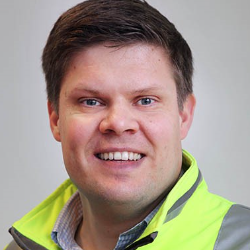 Daniel Keßler, PhD, Managing Director, DSB Säurebau
Autoclaves and pressure vessels are key equipment in HPAL and POX applications. Surface protection linings within these vessels consist of combined linings using membranes and bricks. Due to temperature, pressure, and chemical attacks, several relinings are necessary during the mine lifetime. We show the latest developments and field experience in relining of pressure vessels in Ni, Co, and Au applications.
Flash Tank Evolution in the Autoclave Industry
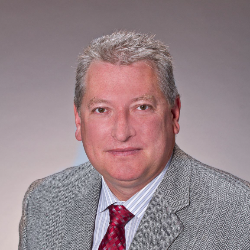 Johann Verster, Chemical Engineer, Process, Caldera Engineering
The presentation offers valuable insights into the role and efficiency of flash tanks in the High Pressure Acid Leach (HPAL) process. These vessels are primarily used to reduce pressure from the reactor or autoclave in a stepwise manner, from extremely high pressures down to atmospheric conditions. Over the years, the design of flash tanks and associated equipment has evolved significantly, resulting in systems that are now considered both robust and efficient.
 Practical Use of CFD Modeling and Pilot Testing for High Pressure Autoclave Mixing Performance Optimization
 Jason Giacomelli, Mixing Technology Manager, Mixers, SPX Flow
This presentation will demonstrate the role mixers play in the HPAL process through discussion of real-life examples. This will be done by utilizing CFD to compare different mixing solutions with respect to velocity/energy distribution, acid concentration distribution, and residence time distribution. The latest results of Large Eddy Simulations in an HPAL application will be shared, and finally, the latest results of impeller wearing resistance pilot testing with CFD verification will be reviewed to complete the discussion on the importance of mixers in HPAL
10:30 amCoffee & Bagel Break in the Exhibit Hall with Last Chance for Poster Viewing (Sponsorship Opportunity Available)
Revolutionizing Equipment Reliability: The Game-Changing Impact of FM-1500 & BM-1600 Coating Technologies
 Evelyn Ng, PhD, Group Materials & Innovation Manager, Callidus Group
This presentation highlights the breakthrough FM-1500 & BM-1600 coating technologies, designed to enhance the reliability and lifespan of critical equipment in severe service mining. The session will cover their unique properties, successful case studies, and the significant improvements they bring to operational efficiency, safety, and cost-effectiveness. Attendees will gain insights into how these surface technologies are transforming asset integrity management in extreme service environments.
NOVEL METHODS AND PROCESS OPTIMIZATION
Using Activated-Carbon-Assisted Hydrometallurgical Approaches to Recover Nickel from Mine Tailings
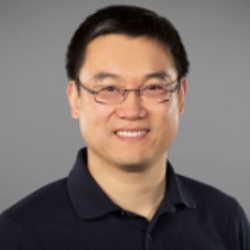 Pengbo Chu, PhD, Nevada Gold Mines Prof & Asst Prof, Department of Mining and Metallurgical Engineering, University of Nevada
This presentation proposes the use of activated carbon as a catalyst with sulfuric acid to enhance the recovery of nickel in a nickel-sulfide rougher flotation tailing. The results show that 98% Ni can be recovered into the solution under certain conditions. The ability of the activated carbon to convert the dissolved ferrous ions into ferric was proposed to be the main reaction for the enhanced metal leaching.
Crushing Smarter, Not Harder: Revolutionizing Ore Processing Efficiency with Breakthrough Heat Treatment Technology
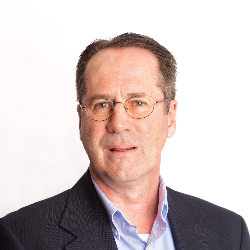 David A Craig, PhD, Vice President, Jenike & Johanson Inc.
Comminution accounts for ~3% of global energy use, making it a key target for decarbonization in the battery supply chain. Microwave pre-treatment can significantly reduce crushing energy, creating micro-fractures that improve grinding, flotation, and leaching efficiency. This talk explores how microwave-assisted comminution enhances the processing of lithium, nickel, cobalt, and graphite, supports new low-emission flowsheets, and offers a path to more sustainable battery materials production.
12:30 pmEnjoy Lunch on Your Own
Unlocking Enhanced Copper and Nickel Recovery through High-Pressure Slurry Ablation (HPSA)
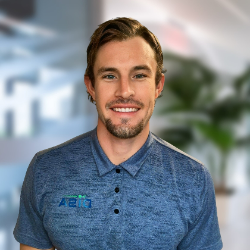 Jordan Dick, Technical Sales Manager, Disa Technologies
High-Pressure Slurry Ablation (HPSA) is a novel process that uses high-energy particle collisions to liberate valuable minerals without overgrinding. Originally developed for uranium waste, recent testing shows improved copper and nickel recovery through enhanced surface activation and flotation performance. By using the ore as its own grinding media, HPSA reduces consumables and energy use, offering a cost-effective, scalable solution.
2:35 pmSession Break
CLOSING PLENARY PANEL DISCUSSION
Navigating the Global EV Growth in Harmony with Shifting US Policy, Demanding Energy Security, and Big Data Requirements
Christina Lampe-Onnerud, PhD, Founder and CEO, Cadenza Innovation
In a world where EV momentum continues to evolve, the industry is facing great uncertainty in policy and energy priorities. In this Plenary Closing Discussion, we are ending the conference with a thought-provoking and insightful panel of experts led by Christina Lampe-Onnerud to help us think through: Where is the US EV market going in the aftermath of the Big Beautiful Bill and how is this different in Europe and Asia? What are the effects on US electricity infrastructure with Energy Security, EV growth and Big Data supercharge? How do we as an industry navigate these uncertain times?
3:45 pmClose of Conference