Nickel-Cobalt-Copper
Advances in Mining & Metallurgical Processing Methods for Extraction, Recovery & Recycling Critical Minerals
12/9/2026 - December 10, 2026 ALL TIMES PST
With growing demand for nickel, cobalt, and copper driven by global electrification, this conference track focuses on advances in metallurgical processing and mineral extraction supporting critical metals supply. It explores key trends, challenges, and opportunities across the Ni–Co–Cu value chain, from ore processing through to refined and battery-grade products. The program highlights developments in processing efficiency, product quality, and project innovation, as well as emerging approaches to improving performance and sustainability in integrated mineral processing operations.
Wednesday, December 9
THE FUTURE OF CRITICAL METALS: MARKETS, TECHNOLOGIES, AND SUSTAINABLE PRODUCTION
Organizer's Remarks
Chairperson's Remarks
Michael Dry, PhD, Owner, Arithmetek, Canada , Owner , Arithmetek Inc
Nickel, Cobalt & Copper Markets: Navigating Supply, Demand, and the Energy Transition

This presentation will examine global nickel, cobalt, and copper market trends, exploring supply-demand dynamics, investment drivers, geopolitical influences, and the evolving role of these critical metals in the energy transition.
The Atlas Materials Process for Nickel, Cobalt, and Magnesium-Metal Recovery

The Atlas Materials process extracts nickel, cobalt and magnesium from nickel saprolite ores. Nickel and cobalt are recovered as Mixed Hydroxide Precipitate (MHP) suitable for refining to supply lithium ion battery PCAM formulations. Magnesium is recovered from the high purity magnesium chloride solution remaining after nickel and cobalt recovery using pyrohydrolysis to form MgO and recycle HCl followed by aluminothermic reduction for form Mg metal.The extraction residue, rich in silica, is an SCM with a market into the concrete industry. This ensures a zero solid waste footprint. The process development and current state of deployment will be presented and discussed.
Sponsored Presentation (Opportunity Available)
Refreshment Break in the Exhibit Hall with Poster Viewing
Nickel and Manganese from Sea Nodules (Part 2): Novel Technologies
This paper examines various processing options for extracting battery metals from sea nodules, with the Mn product being manganese sulfate. The techno-economics of various proposed routes are examined via process modeling and estimation of the capital and operating costs associated with the routes examined. The routes are ranked via cash flow modeling. The limitations of the battery market are also examined.
Too Good to Be True? Clean, Sustainable Metals Processing through Low-Cost, High-Performance, Rock-Breathing Bacteria

Viridian Biometals is developing proprietary critical minerals refining technology that is 2x more profitable and far cleaner than conventional processing. The technology harnesses bacteria that breathe ore and extract metals with no toxic waste, no fossil fuel combustion, and no need for a freshwater supply, solving the most pressing environmental and economic problems with conventional refining.
The Piauà Nickel Project: Advancing Sustainable Low Carbon Nickel Heap Leach Production in Brazil
The Piauà Nickel Project demonstrates a pathway toward sustainable, low-carbon nickel production through the application of heap leach technology in Brazil. This presentation will explore project development, process innovation, and sustainability initiatives supporting the delivery of battery-grade nickel. Key challenges and opportunities in advancing responsible nickel supply for the energy transition will also be discussed.
Close of Day
Thursday, December 10
Registration and Morning Coffee
LEACHING OPERATIONS, HPAL, AND PROCESS SCALE UP
Organizer's Remarks
Sarah Stockwell, PhD, Conference Producer, Cambridge EnerTech , Conference Producer , Cambridge EnerTech
Chairperson's Remarks
David Dreisinger, PhD, Professor, Materials Engineering, University of British Columbia , Prof , Materials Engineering , University of British Columbia
Sponsored Presentation (Opportunity Available)
Autoclave Discharge Line Design and Operation
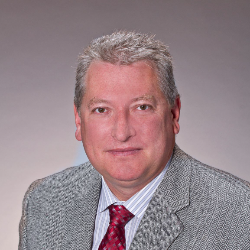
An autoclave discharge line is arguably the most critical pipeline in an HPAL or POX plant. Its design requires careful consideration of numerous process, mechanical, and operational factors. Equally important is the development of robust operating procedures to ensure safe, reliable, and efficient operation. While several design configurations and operating philosophies are used across the industry, each has distinct advantages and limitations.
Reduced Scaling and Erosion in HPAL
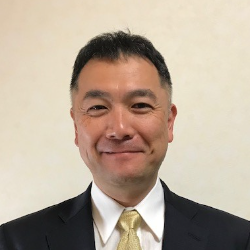
Advanced impeller design creates a stable and uniform flow pattern across the entire autoclave compartment, ensuring effective suspension without excessive local shear peaks. By combining moderate tip speeds with controlled hydrodynamics, the system minimizes both particle-induced erosion and deposit formation on impellers and vessel walls. This leads to reduced scaling, lower wear, longer operating campaigns, and improved HPAL process reliability.
Sponsored by: Optimized Up/Down Pumping Agitator Design for Moderate Oxygen Flow Pressure Leaching

Freeport-McMoRan’s Morenci, Arizona copper operation uses two pressure leach vessels (PLVs) for copper recovery. As throughput increased from 11 to 18 stph per vessel and the process evolved from partial oxidation (2005) to full oxidation (2015), oxygen demand and gas flow rates rose significantly. Evaluation of the existing LIGHTNIN agitators led to a novel design replacing the upper up-pumping wide blade hydrofoil with a down-pumping impeller. The resulting impinging axial flow improved gas dispersion, solids suspension, and gas handling capacity while significantly reducing headspace fouling. Successfully operating since 2024, the design is now being further characterized for performance, power consumption, erosion resistance, and blade life optimization in pressure oxidation autoclaves
Coffee and Bagel Break in the Exhibit Hall. Last Chance for Poster Viewing.
The Albion Processâ„¢ for Copper: A Framework for Choosing Between Hydrometallurgy and Smelting

Recovering copper from increasingly complex concentrates requires robust process selection. This presentation examines the Albion Process for Copper, focusing on the leach chemistry and operating variables that govern subsequent metal recovery. These mechanisms are linked to impurity deportment and downstream recovery. Finally, a technical-economic framework is presented for identifying when Albion Process leaching can outperform smelting, and where a conventional pyrometallurgical treatment remains preferred in project flowsheet selection.
Fine-Tuning the Sledgehammer
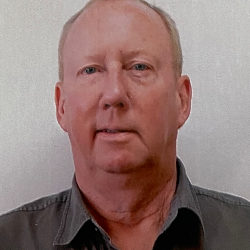
Nickel-laterite hydrometallurgical use of high temperatures, high pressure, and copious amounts of sulfuric acid can be described as using a sledgehammer to release the nickel. SDD has rejigged the process and repurposed the autoclaves to better utilize the sulfuric acid, lowered temperature, and pressure of the autoclaves to reduce acid consumption and reduce the waste production while maintaining the nickel recovery.
OPTIMIZING HYDROMETALLURGICAL OPERATIONS
Milling Isn’t Magic: Capturing Opportunity through Functional Performance Analysis
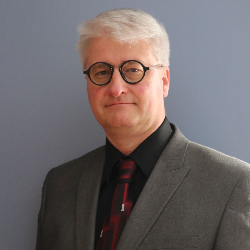
Maximizing profits means getting grinding right. Throughput, recovery, and efficiency depend on comminution circuit performance. Interactions between the ball mill and the classification system (e.g., pumps and cyclones) are not intuitive. Trial and error generally leads to suboptimal results. Functional performance analysis provides practical, quantitative insight into the distinct functions of milling, classification, and aggregate closed-circuit efficiency. This makes circuit optimization science, not serendipity.
Enjoy Lunch on Your Own
Chairperson's Remarks
Michael Dry, PhD, Owner, Arithmetek, Canada , Owner , Arithmetek Inc
Driving Efficiency in Hydrometallurgy through Diluent Selection

Choosing the right diluent is key to optimizing solvent extraction performance in hydrometallurgical systems. Escaid 110 fluid enables faster, more consistent phase separation due to its optimized viscosity, density, and low aromatic content. These properties also enhance safety and operational efficiency, making diluent selection critical for the recovery of Rare Earth Elements (REEs) and critical battery materials such as lithium, nickel, and cobalt.
Increasing Nickel and Copper Production in the Face of Declining Ore Grades through D-Solve

As nickel and copper demand is growing substantially, ore grades in existing mines are rapidly declining. Allonnia’s D-Solve technology helps address this challenge through a selective dissolution process leveraging recyclable Biosolutions that both remove impurities (gangue) from ore concentrates and upgrade the target metal. In 2026, D-Solve was employed at pilot scale, treating almost 30 tons of nickel concentrate at the Humboldt Mill in Michigan. The pilot test results demonstrated almost 30% magnesium removal while upgrading nickel by 1-2%. Laboratory results will also be presented showing compelling value propositions for the use of D-Solve in the processing of copper-molybdenum concentrates.
Session Break
CLOSING PLENARY KEYNOTE
Panel Moderator:
CLOSING PLENARY PANEL DISCUSSION:
Charging Forward: Batteries at the Center of a Shifting World
Christina Lampe-Önnerud, PhD, Founder and CEO, Cadenza Innovation , Founder and CEO , Exec Mgmt , Cadenza Innovation Inc
As geopolitical shifts and an evolving policy landscape redraw the battery supply chain, EVs, BESS, and AIDC have emerged as critical pillars of global energy security. Dr. Christina Lampe-Önnerud, Founder and CEO of Cadenza Innovation, opens AABC with a candid look at where growth is accelerating across materials, components, battery systems, and applications—and why this industry must now decide, together, how it builds the next era of global energy.
Close of Conference
For more details on the conference, please contact:
Sarah Stockwell, PhD
Conference Producer
Cambridge EnerTech
Phone: (+1) 781-247-1816
Email: sstockwell@cambridgeenertech.com
For partnering and sponsorship information, please contact:
Companies A-K
Sherry Johnson
Lead Business Development Manager
Cambridge EnerTech
Phone: (+1) 781-972-1359
Email: sjohnson@cambridgeenertech.com
Companies L-Z
Rod Eymael
Senior Business Development Manager
Cambridge EnerTech
Phone: (+1) 781-247-6286